


Page 79 - Designing Ways 264
P. 79
3.   Creating a path for metro passengers.
                                                             4.   Making  sure  that  the  design  solution  simultaneously  resolves
                                                                the three concerns mentioned above, and that it can operate
                                                                coherently and without any interference.

                                                             By closely studying the flow of pedestrians and vehicles alongside
                                                             local vendors in the zone, the first step in the design process was
                                                             to shape the flow of passengers that get off at this train station and
                                                             spread into the neighbourhood in very short time intervals. By
                                                             studying the intersection of vehicle routes, metro passenger traffic,
                                                             and the north street, the team found the answer by identifying where
                                                             these three paths intersect, and then used that spot as a focal point
                                                             for a ripple effect. All of the events and functions were derived from
                                                             these cohesive lines.

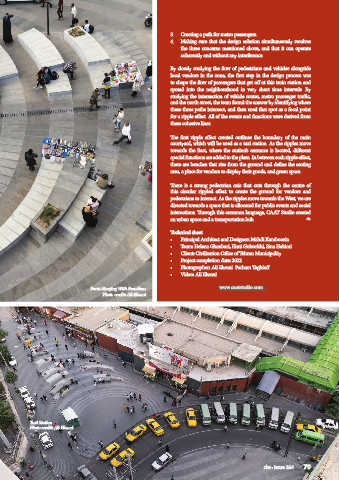
                                                             The first ripple effect created outlines the boundary of the main
                                                             courtyard, which will be used as a taxi station. As the ripples move
                                                             towards the East, where the station’s entrance is located, different
                                                             special functions are added to the plaza. In between each ripple effect,
                                                             there are benches that rise from the ground and define the seating
                                                             area, a place for vendors to display their goods, and green space.

                                                             There is a strong pedestrian axis that cuts through the centre of
                                                             this circular rippled effect to create the ground for vendors and
                                                             pedestrians to interact. As the ripples move towards the West, we are
                                                             directed towards a space that is allocated for public events and social
                                                             interactions. Through this common language, CAAT Studio created
                                                             an urban space and a transportation hub.       dw

                                                             Technical sheet
                                                             •   Principal Architect and Designer: Mahdi Kamboozia
                                                             •   Team: Helena Ghanbari, Hani Golsorkhi, Sina Hakimi
                                                             •   Client: Civilization Office of Tehran Municipality
                                                             •   Project completion date: 2022
                                                             •   Photographer: Ali Ehsani. Parham Taghioff
                                                             •   Video: Ali Ehsani


                                 Form Merging With Functions                  www.caatstudio.com
                                     Photo credit: Ali Ehsani


           Taxi Station
           Photo credit: Ali Ehsani


                                                                                                  dw • Issue 264  79

