


Page 93 - Designing Ways 286
P. 93
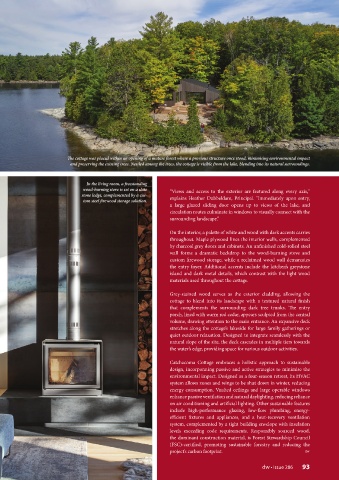
The cottage was placed within an opening of a mature forest where a previous structure once stood, minimising environmental impact
                          and preserving the existing trees. Nestled among the trees, the cottage is visible from the lake, blending into its natural surroundings.


                               In the living room, a freestanding
                              wood-burning stove is set on a slate   “Views and access to the exterior are featured along every axis,"
                              stone ledge, complemented by a cus-  explains Heather Dubbeldam, Principal. "Immediately upon entry,
                              tom steel firewood storage solution.
                                                             a large glazed sliding door opens up to views of the lake, and
                                                             circulation routes culminate in windows to visually connect with the
                                                             surrounding landscape.”

                                                             On the interior, a palette of white and wood with dark accents carries
                                                             throughout. Maple plywood lines the interior walls, complemented
                                                             by charcoal grey doors and cabinets. An unfinished cold-rolled steel
                                                             wall forms a dramatic backdrop to the wood-burning stove and
                                                             custom firewood storage, while a reclaimed wood wall demarcates
                                                             the entry foyer. Additional accents include the  kitchen’s greystone
                                                             island and dark metal details, which contrast with the light wood
                                                             materials used throughout the cottage.

                                                             Grey-stained wood serves as the exterior cladding, allowing the
                                                             cottage to blend into  its landscape with a  textured natural finish
                                                             that complements the surrounding dark tree trunks. The entry
                                                             porch, lined with warm red cedar, appears sculpted from the central
                                                             volume, drawing attention to the main entrance. An expansive deck
                                                             stretches along the cottage’s lakeside for large family gatherings or
                                                             quiet outdoor relaxation. Designed to integrate seamlessly with the
                                                             natural slope of the site, the deck cascades in multiple tiers towards
                                                             the water’s edge, providing space for various outdoor activities.

                                                             Catchacoma Cottage embraces a holistic approach to sustainable
                                                             design, incorporating passive and active strategies to minimise the
                                                             environmental impact. Designed as a four-season retreat, its HVAC
                                                             system allows zones and wings to be shut down in winter, reducing
                                                             energy consumption. Vaulted ceilings and large operable windows
                                                             enhance passive ventilation and natural daylighting, reducing reliance
                                                             on air conditioning and artificial lighting. Other sustainable features
                                                             include  high-performance glazing,  low-flow plumbing, energy-
                                                             efficient fixtures and appliances, and a heat-recovery ventilation
                                                             system, complemented by a tight building envelope with insulation
                                                             levels exceeding code requirements. Responsibly sourced wood,
                                                             the dominant construction material, is Forest Stewardship Council
                                                             (FSC)-certified, promoting sustainable forestry and reducing the
                                                             project’s carbon footprint.                    dw


                                                                                                  dw • Issue 286  93

