


Page 39 - Designing Ways 290
P. 39
Adding  portable  dividers  or rolling
                                                                                whiteboards can enhance a space’s
                                                                                adaptability. Teams can use these to
                                                                                create makeshift work zones, giving
                                                                                them control over their immediate
                                                                                environment. Flexibility in design ensures
                                                                                that an office can evolve alongside a team’s
                                                                                need.
                                                                                  Proper lighting and sound control
                                                                                play a significant role in a collaborative
                                                                                workspace. Bright natural light can boost
                                                                                mood and energy levels, improving
                                                                                overall performance. Meanwhile poor
                                                                                acoustic design can lead to distractions
                                                                                and reduced focus.
                                                                                  To manage noise, consider installing
                                                                                acoustic panels or carpets. These materials
                                                                                help absorb sound, creating a  more
                                                                                comfortable environment. Using smart
                                                                                lighting systems that can be adjusted
                                                                                based on tasks or time of day, can further
                                                                                enhance productivity.
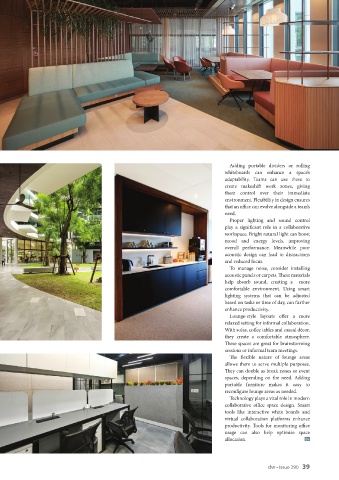
                                                                                  Lounge-style layouts offer a more
                                                                                relaxed setting for informal collaboration.
                                                                                With sofas, coffee tables and casual décor,
                                                                                they create a comfortable atmosphere.
                                                                                These spaces are great for brainstorming
                                                                                sessions or informal team meetings.
                                                                                  The  flexible  nature  of  lounge  areas
                                                                                allows  them  to  serve  multiple  purposes.
                                                                                They can double as break zones or event
                                                                                spaces, depending on the need. Adding
                                                                                portable furniture makes it easy to
                                                                                reconfigure lounge areas as needed.
                                                                                  Technology plays a vital role in modern
                                                                                collaborative office space design. Smart
                                                                                tools like interactive white boards and
                                                                                virtual collaboration platforms enhance
                                                                                productivity. Tools for monitoring office
                                                                                usage can also help optimise space
                                                                                allocation.                 dw


                                                                                                    dw • Issue 290   39

